
LG Refrigerator Displays an Error Code — Possible Sensor or Electronic Control Board Failure
An LG refrigerator error code is a warning that the appliance has detected an abnormal condition. The code may point to a temperature sensor, fan, defrost component, communication problem, or electronic control system. In some cases, the refrigerator continues cooling normally for a while. In others, the error appears together with temperature fluctuations, unusual noises, frost buildup, or complete cooling failure. Understanding what an error code means can help identify the source of the problem, but the code itself does not always identify the exact failed component. A sensor problem, wiring issue, or electronic control board failure can produce similar symptoms, so proper diagnosis is usually required before replacing parts.
LG refrigerators use electronic sensors and control systems to monitor temperature, airflow, compressor operation, defrost cycles, and other functions. When the control system receives a reading outside the expected range, it may display an error code. The exact code depends on the refrigerator model. Common codes can relate to the refrigerator compartment sensor, freezer sensor, evaporator fan, defrost system, ice maker, condenser fan, or communication between electronic components. An error code should therefore be treated as a diagnostic clue rather than an automatic instruction to replace a particular part.
A defective temperature sensor is one possible reason an LG refrigerator displays an error code. Sensors measure the temperature inside specific compartments and send electrical signals to the main control board. If a sensor becomes damaged, disconnected, contaminated, or electrically out of specification, the control board may receive an incorrect temperature reading. The refrigerator can then make incorrect decisions about cooling cycles. Possible symptoms include a sensor-related error code, temperatures that are too warm or too cold, a compressor running for unusually long periods, frequent cycling, food freezing in the refrigerator compartment, or recurring temperature fluctuations. A technician can test the sensor resistance and compare the measurement with the manufacturer's specifications. Wiring and connectors should also be inspected because a properly functioning sensor cannot provide a reliable reading if its circuit is damaged.
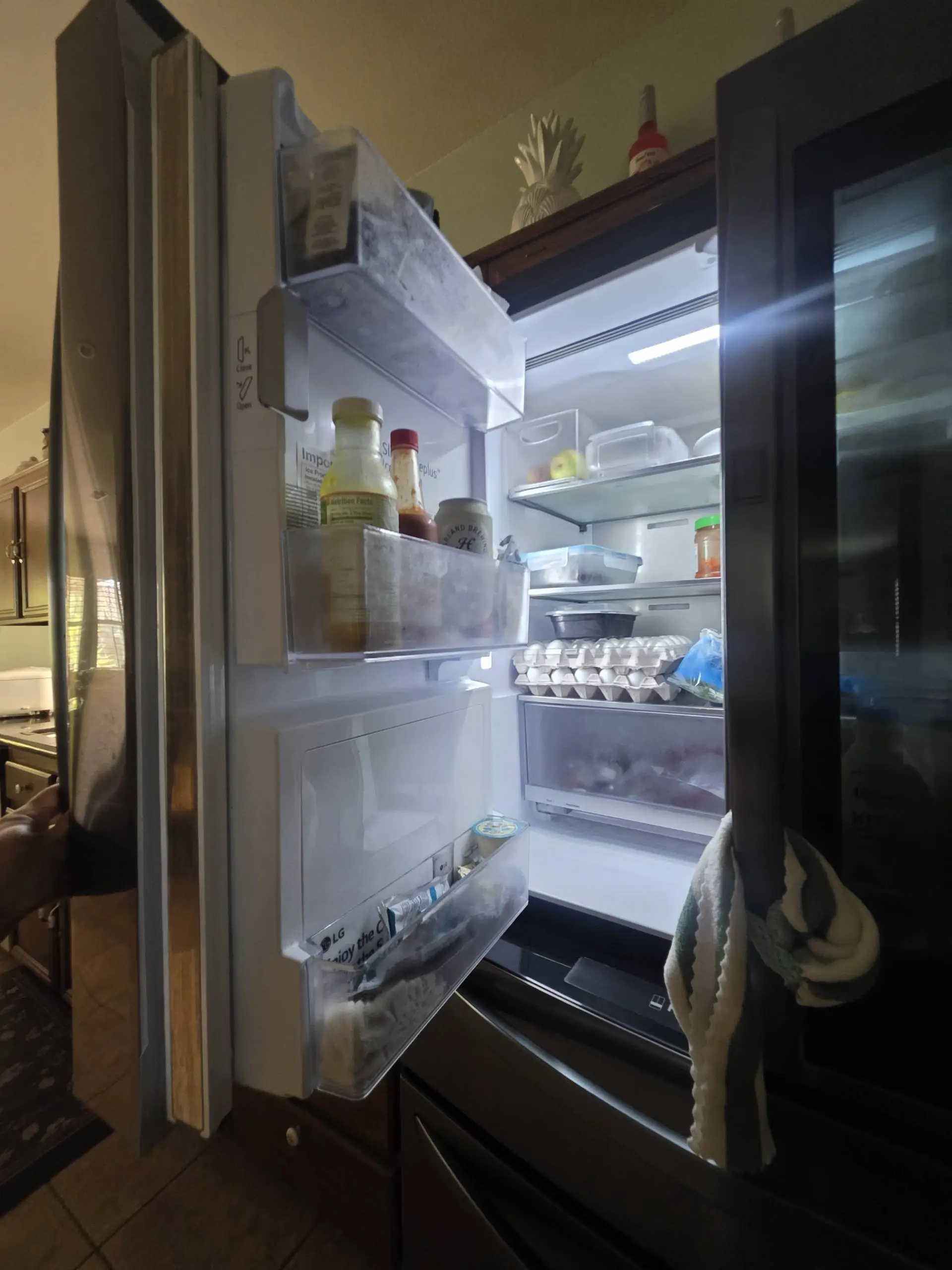
An error code does not necessarily mean that the sensor itself has failed. Loose connectors, damaged wires, corrosion, or poor electrical connections can interrupt communication between the sensor and control board. Refrigerators experience vibration and temperature changes during normal operation, and these conditions can contribute to electrical connection problems over time. A technician may inspect the wiring harness, terminals, and connectors associated with the component identified by the error code. Finding and correcting a wiring problem can restore normal operation without replacing an otherwise functional sensor or control board.
The main electronic control board is another possible source of the problem. It coordinates many refrigerator functions by processing information from sensors and controlling components such as the compressor, fans, valves, and defrost system. If the board develops an internal electrical failure, the refrigerator may display an error code even when the connected sensor or component is functioning correctly. Possible signs of a control board problem include multiple unrelated error codes, intermittent operation, incorrect temperature control, fans or compressors failing to respond properly, and symptoms that temporarily disappear after the refrigerator is unplugged. Control board diagnosis requires more than checking whether the board appears damaged because electronic components can fail internally without visible burn marks or other obvious signs.
Unplugging an LG refrigerator for several minutes and restoring power can sometimes clear a temporary electronic fault. If the error was caused by a momentary communication problem, the code may disappear after the reset.
Professional diagnosis usually begins with identifying the exact LG refrigerator model and documenting the displayed error code. The technician can then check the components associated with that code and compare their operation with the manufacturer's specifications. Depending on the symptoms, the inspection may include checking refrigerator and freezer temperatures, testing sensors and their wiring, measuring sensor resistance and electrical continuity, examining connectors and harnesses, checking evaporator and condenser fan operation, inspecting the defrost system, testing voltage and communication circuits, and evaluating the main electronic control board. This process helps distinguish between a failed sensor and a problem elsewhere in the circuit.
An LG refrigerator that repeatedly displays an error code should be inspected, especially when the code is accompanied by cooling problems or abnormal operation. Replacing parts based only on the displayed code can be expensive if the actual cause is a wiring fault, connector problem, or control issue. Professional appliance repair can identify the failed component, verify the electrical circuit, and determine whether the sensor, wiring, control board, or another refrigerator component requires replacement.
If your LG refrigerator displays an error code, contact a qualified appliance repair technician for diagnosis. Prompt service can help prevent worsening cooling problems, unnecessary part replacement, and potential food loss.