
LG Refrigerator Door Does Not Close Completely — Possible Door Hinge or Gasket Failure
An LG refrigerator door that does not close completely can lead to several problems, including higher energy consumption, unstable internal temperatures, excessive condensation, and food spoilage. Even a small gap between the door and refrigerator cabinet allows warm air to enter, forcing the cooling system to work harder to maintain the selected temperature. In many cases, the problem develops gradually as door hinges become misaligned, rubber gaskets lose their flexibility, or refrigerator components shift out of position. Identifying the cause early can help prevent more expensive repairs and keep the appliance operating efficiently.
One of the most common reasons an LG refrigerator door does not close properly is a damaged or worn door gasket. The gasket is a flexible rubber seal installed around the perimeter of the refrigerator door. Its purpose is to create an airtight barrier when the door is closed, preventing warm air from entering the refrigerated compartment. Over time, exposure to temperature changes, repeated opening and closing, and accumulated dirt can cause the gasket to become cracked, loose, or deformed. When this happens, the seal may no longer make consistent contact with the refrigerator cabinet, leaving small openings that allow outside air to enter.
Door hinge problems can also prevent an LG refrigerator from closing completely. Hinges support the weight of the door and maintain its correct position relative to the refrigerator cabinet. Years of frequent use, excessive weight stored in door shelves, or loose mounting hardware can cause the hinges to shift or wear out. When a hinge becomes misaligned, the door may appear slightly tilted, rub against the cabinet, or require additional force to close. In some situations, the door may swing open again immediately after being pushed shut. Damaged hinge components or worn door supports may require professional adjustment or replacement to restore proper alignment.
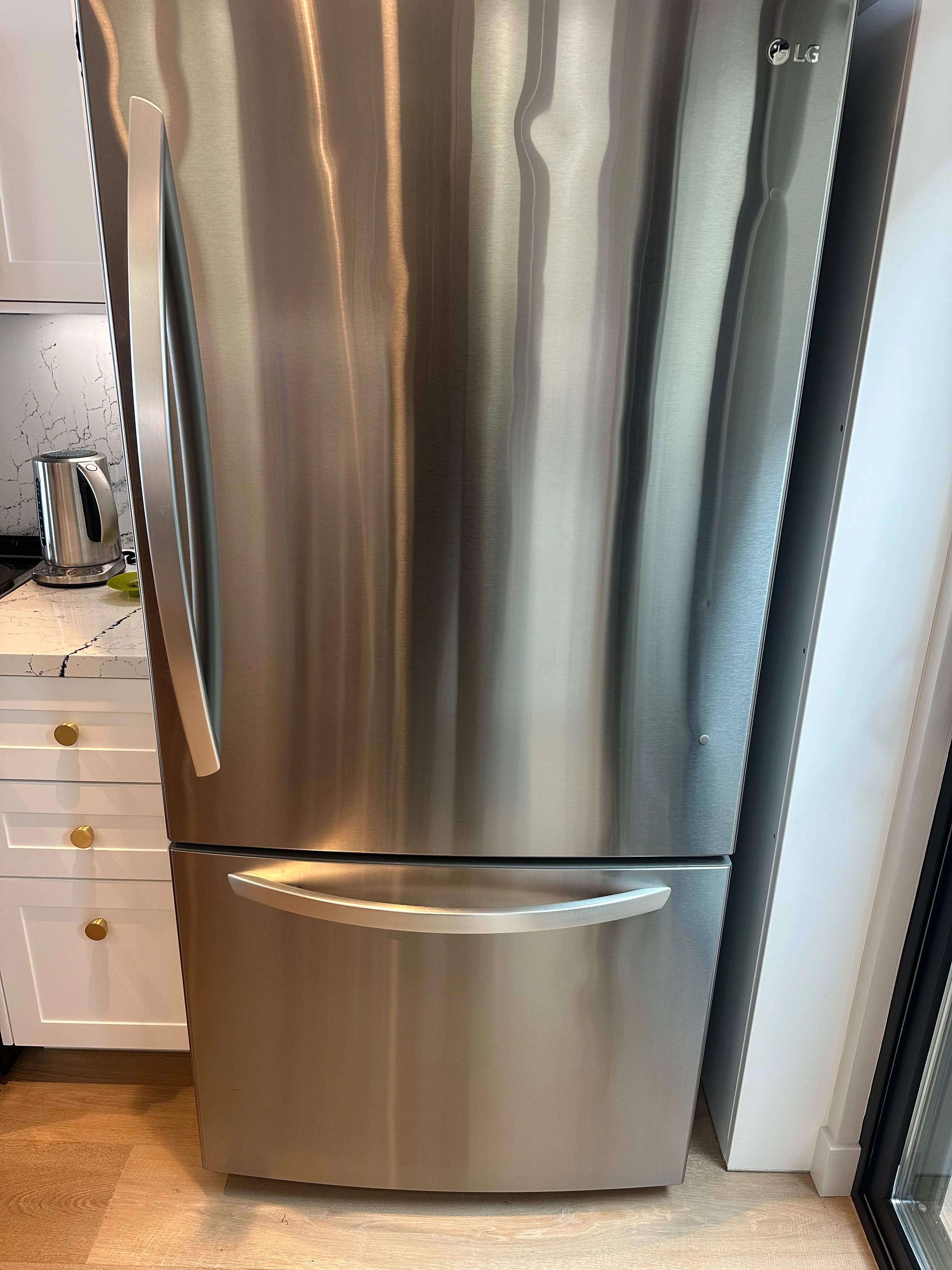
Another possible cause involves an uneven refrigerator position or improperly adjusted leveling feet. Refrigerators are designed to stand securely on a stable surface, and many models require a slight backward tilt to help the doors close naturally. If the appliance leans forward or rests unevenly on the floor, the refrigerator door may not close by itself or remain securely shut. This problem sometimes appears after moving the refrigerator for cleaning, rearranging the kitchen, or installing new flooring. Checking the appliance position and adjusting its leveling feet according to the manufacturer's instructions can help restore normal door movement without replacing mechanical components.
Food containers, overloaded door shelves, and incorrectly positioned refrigerator drawers can also interfere with proper door closure. Large bottles placed near the edge of a shelf may press against the interior door compartments, while a vegetable drawer that is not fully inserted can prevent the door from reaching its closed position. Ice buildup around the freezer compartment or misplaced storage accessories may create similar obstacles. Before assuming that an LG refrigerator has a mechanical failure, inspect the interior for objects blocking the door. Rearranging stored items and ensuring that drawers and shelves are correctly installed may resolve the issue immediately.A refrigerator door that remains partially open often produces noticeable warning signs. Homeowners may discover moisture droplets on interior walls, condensation around storage drawers, or frost forming in areas where it should not normally appear. Food may spoil faster than expected because the refrigerator cannot maintain a consistent temperature.
Several simple inspections can help determine whether the problem involves the door gasket or hinges. Start by examining the rubber seal for visible cracks, flattened sections, dirt buildup, or areas that have separated from the door. Cleaning the gasket with a soft cloth and mild soapy water may improve its contact with the refrigerator cabinet. You can also close the door on a thin piece of paper and gently pull it outward. If the paper slides out with very little resistance in certain areas, the gasket may not be sealing properly. However, this test alone does not confirm gasket failure, since door alignment and cabinet positioning can produce similar results. If the door appears uneven or makes unusual noises while moving, its hinges should also be inspected.
When basic cleaning, repositioning stored items, and leveling adjustments do not solve the problem, professional refrigerator repair may be necessary. A qualified technician can inspect the door hinges, mounting hardware, gasket condition, and overall cabinet alignment to identify the source of the failure. Depending on the findings, repairs may involve replacing a damaged gasket, adjusting hinge positioning, or installing new door support components. Continuing to operate an LG refrigerator with an improperly closing door can affect cooling performance and increase the risk of food spoilage. Addressing the issue promptly helps restore a reliable door seal, maintain stable food storage temperatures, and extend the refrigerator's service life.