
LG Refrigerator Has Excessive Condensation Inside — Possible Door Gasket or Temperature Control Issues
An LG refrigerator should maintain a stable, cool environment with relatively low humidity inside the cabinet. If you notice water droplets on the walls, shelves, food containers, or ceiling of the refrigerator compartment, excessive condensation usually indicates that warm, humid air is entering the unit or that the refrigerator is not maintaining the correct temperature. Condensation can appear occasionally when the door is opened frequently or when warm food is placed inside. However, persistent moisture, puddles, wet shelves, or water collecting around the vegetable drawers should be investigated. A damaged door gasket, incorrect temperature setting, airflow restriction, or cooling-system problem can all contribute to excessive condensation.
The door gasket is one of the first components to inspect. This flexible seal runs around the refrigerator door and prevents outside air from entering the cabinet. If it is torn, cracked, loose, hardened, or deformed, the refrigerator may struggle to maintain a proper seal. A poor seal allows warm room air to enter continuously. Because warm air contains more moisture than cold air, that moisture can condense when it contacts cold interior surfaces. Close the refrigerator door and inspect the entire gasket for visible gaps between the seal and cabinet. You can also place a sheet of paper between the gasket and cabinet, close the door, and gently pull the paper. If it slides out very easily in several areas, the seal may not be making sufficient contact. A gasket can sometimes be repositioned if it has become slightly distorted. If the material is damaged or has permanently lost its shape, replacement is usually the appropriate repair.
Even an intact gasket cannot prevent condensation if the refrigerator door does not close completely. Food containers, shelves, or drawers can interfere with the door and create a small opening. Check that nothing inside the refrigerator is pushing against the door. Also inspect the door alignment and hinges because a sagging door may prevent the gasket from contacting the cabinet evenly. If the refrigerator door appears uneven, requires unusual force to close, or repeatedly pops back open, the hinges or door alignment may need professional adjustment.
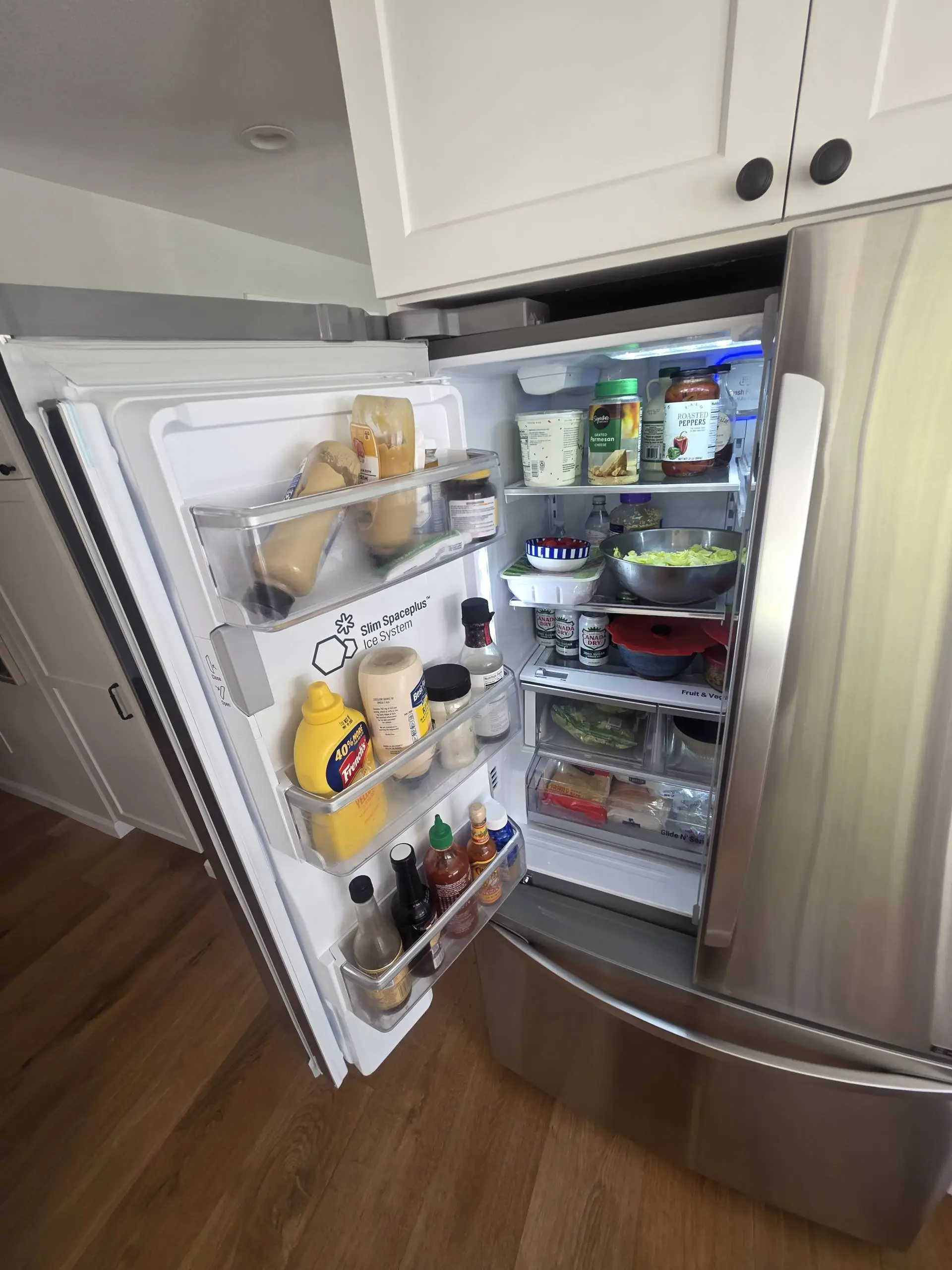
An incorrect temperature setting can also increase condensation. The refrigerator compartment should generally be kept around 37°F , while the freezer is typically set around 0°F, although recommended settings can vary by model. If the refrigerator temperature is too high, moisture may remain in the air and condense on interior surfaces. Adjusting the cooling setting slightly may help, but the refrigerator should not be set unnecessarily cold. A unit that cannot maintain the selected temperature despite running normally may have a more significant cooling problem. Possible causes include restricted airflow, a malfunctioning fan, dirty condenser components, a defective temperature sensor, or a sealed-system problem.
Proper airflow is also necessary to distribute cold air throughout the cabinet. Packing the refrigerator too tightly can block air vents and create areas with different temperatures. Keep food and containers away from interior air vents and avoid pushing large items directly against the rear wall when they restrict circulation. Poor airflow can result in warmer sections of the refrigerator, which may increase condensation and cause some foods to spoil faster. Frequent door opening is another common source of moisture. Every time the refrigerator door opens, warm and humid room air enters the cabinet. That moisture can condense on cold surfaces. If the door is opened repeatedly throughout the day, organize frequently used foods where they are easy to reach and make sure the door closes completely after each use. During periods of high indoor humidity, condensation may become more noticeable even when the refrigerator is functioning normally.
The food placed inside the refrigerator can also contribute to excessive moisture.
Water inside an LG refrigerator can sometimes be related to a clogged drain or defrost problem. During normal operation, moisture produced during cooling and defrost cycles needs to be managed through the refrigerator's drainage system. If the drain becomes blocked, water may accumulate in unexpected areas. Ice buildup around the rear wall, water beneath drawers, or repeated pooling can indicate a drainage or defrost issue. A refrigerator that develops heavy frost along the rear interior panel may have a problem with the defrost heater, sensor, control system, or airflow. These components generally require diagnostic testing rather than simple cleaning.
If the gasket seals properly, the doors close correctly, and condensation continues, the temperature-control system should be evaluated. Temperature sensors provide information to the control board so the refrigerator can regulate cooling. A faulty thermistor may send inaccurate temperature readings, causing the compressor or fans to operate incorrectly. In some cases, the main electronic control board may also contribute to temperature instability. Diagnosing these components requires checking actual temperatures, sensor resistance, wiring, and control signals. A technician should also consider compressor operation, evaporator fan performance, condenser airflow, and the sealed refrigeration system when the refrigerator cannot maintain the proper temperature.
A small amount of condensation can be normal, especially after frequent door opening or during humid weather. Persistent moisture, water pooling, excessive frost, or unstable temperatures are more concerning. Professional service is recommended when the refrigerator continues to develop condensation after basic checks, when the door gasket is damaged, or when the cabinet temperature remains outside the normal range. A technician can determine whether the problem comes from the door seal, hinges, temperature sensor, fan system, defrost components, control board, or sealed system.
Addressing excessive condensation early can help prevent food spoilage, frost accumulation, water damage inside the refrigerator, and unnecessary strain on the cooling system. If your LG refrigerator remains damp inside despite proper temperature settings and a properly closed door, professional diagnosis can identify the underlying fault before it develops into a more expensive repair.