
LG Refrigerator Makes a Buzzing and Vibrating Noise — Possible Compressor Mount or Condenser Fan Problems
An LG refrigerator making a buzzing and vibrating noise can be a sign of a mechanical problem, especially when the sound is louder than usual, happens continuously, or changes when the refrigerator starts and stops cooling. Some refrigerator noises are normal, but persistent buzzing or vibration may indicate an issue with the compressor mounts, condenser fan motor, fan blade, or another component near the bottom or rear of the appliance. Understanding where the noise comes from can help determine whether the refrigerator needs a simple adjustment or professional appliance repair.
Modern refrigerators naturally produce several operating sounds. The compressor can hum while it runs, refrigerant can make a soft gurgling sound, and fans may create a low airflow noise. These sounds are generally normal when they are relatively quiet and consistent. A problem becomes more likely when the refrigerator suddenly becomes louder or begins vibrating against the floor, wall, cabinet, or surrounding surfaces. A buzzing noise that increases when the compressor starts may point toward a mechanical or electrical component that is no longer operating correctly. Two common causes are compressor mount problems and condenser fan problems.
The compressor is located near the bottom rear of the refrigerator and is responsible for circulating refrigerant through the sealed cooling system. It is mounted to the refrigerator cabinet using rubber or other vibration-absorbing supports. When these mounts become worn, damaged, loose, or displaced, the compressor may transmit more vibration to the cabinet. Instead of producing a relatively quiet hum, the refrigerator may develop a noticeable buzzing, rattling, or vibrating sound. You may notice that the noise starts when the compressor turns on, becomes stronger during cooling cycles, causes the cabinet or nearby surfaces to vibrate, changes when the refrigerator is moved slightly, or sounds like a low mechanical buzz from the rear of the unit. A technician can inspect the compressor mounting hardware and vibration isolators to determine whether they need adjustment or replacement.
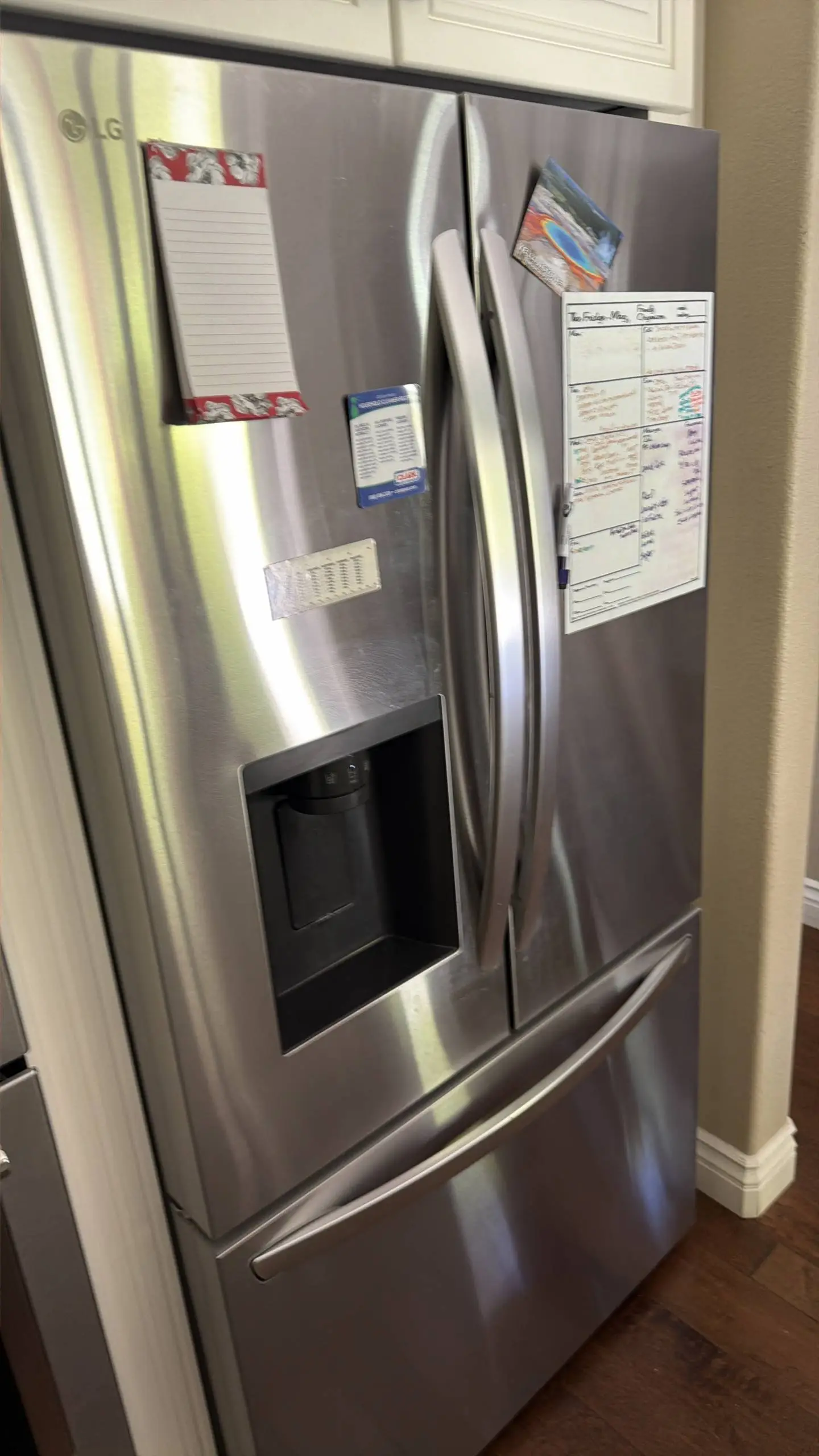
The condenser fan is another common source of unusual refrigerator noise. It helps move air across the condenser and compressor area to remove heat generated during operation. If the fan motor bearings begin to wear, the motor can produce a buzzing or grinding sound. A damaged or unbalanced fan blade can also create vibration. In some cases, the blade may contact a piece of plastic, wiring, or another component. Dust and debris around the condenser fan can make the problem worse by restricting airflow and placing additional strain on the motor. A failing condenser fan may produce buzzing from the lower rear section, rattling or clicking as the fan rotates, vibration that changes with fan speed, excessive dust around the compressor area, higher refrigerator temperatures, or longer compressor run times. If the fan motor is failing, replacing the motor or damaged fan assembly may be necessary.
Not every vibrating refrigerator has a failed component. An LG refrigerator that is not level can transmit normal compressor vibration through the cabinet and floor. If the appliance is touching a wall, cabinet, countertop, or another appliance, the contact can amplify an otherwise normal operating sound. Loose drain pans, covers, tubing, shelves, and other components can also create rattling or buzzing noises. Before assuming that a major component has failed, check whether the refrigerator is stable and has enough clearance from surrounding surfaces. Avoid placing objects on top of the refrigerator if they vibrate when the compressor or fans operate. If the noise remains after these basic checks, the source should be inspected more closely.
A defective condenser fan is more serious than a noise problem alone. Without proper airflow, heat can accumulate around the condenser and compressor. The refrigerator may then struggle to maintain the selected temperature. You may notice that the compressor runs for extended periods, the refrigerator takes longer to cool, or the cabinet becomes unusually warm in certain areas. Continued operation under these conditions can place additional stress on the cooling system. For that reason, a refrigerator with a noisy condenser fan should be diagnosed rather than ignored.
The exact source of an LG refrigerator's buzzing and vibration cannot always be identified by sound alone. A technician can inspect the condenser fan, compressor mounts, fan blade, wiring, cabinet panels, leveling, and other components to locate the source of the noise. If the refrigerator is also experiencing temperature problems, the technician can check whether the noise is related to reduced airflow or another cooling-system issue. Prompt diagnosis is especially useful when the noise is getting louder, the refrigerator is running continuously, or food is no longer staying at the correct temperature.
If your LG refrigerator makes a buzzing and vibrating noise, do not ignore a sudden change in its normal operating sound. A worn compressor mount, failing condenser fan motor, damaged fan blade, or loose component can all create excessive vibration. Professional inspection can identify the actual cause and determine whether a component needs adjustment, repair, or replacement before the problem affects refrigerator performance.